-Editorial
Residents of Calexico can expect a major change in how they cross the border in 2026 as a temporary pedestrian port of entry opens, marking the beginning of a generational transformation of the city’s border infrastructure.
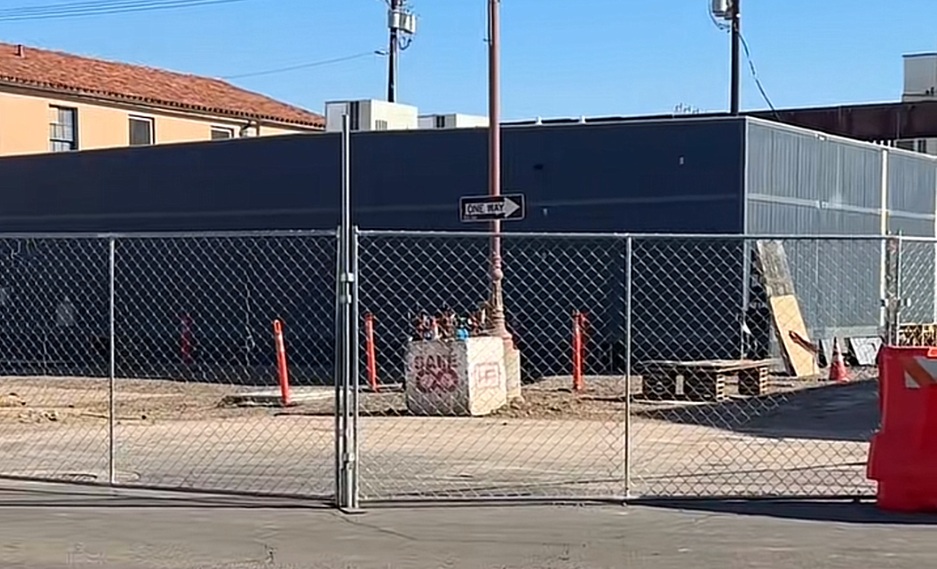
The new temporary crossing, located near Heffernan Avenue—close to where the original pedestrian entry once stood in front of the Sam Ellis store—will allow travelers to cross similarly to how ancestors did nearly a century ago. This measure comes as the 50-year-old Calexico port of entry on First Street is scheduled for deconstruction to make way for a modern facility built to current standards.
 Inaugurated during President Richard Nixon’s administration, the existing port has been a fixture of cross-border life for generations.
The General Services Administration is building a temporary pedestrian processing facility with six inspection booths to maintain the flow of pedestrians between Mexico and the U.S. during construction of a new 31,000-square-foot processing building.
Pedestrians would be rerouted east to the Heffernan Avenue bus stop area to enter the temporary facility, be processed, and exit on the north side, while southbound travelers return via a designated lane along the border wall. Initially proposed on city property under a temporary easement, the GSA now plans to purchase the land to address liability concerns, promising post-construction landscaping and a small pedestrian plaza with public art.
The Calexico border crossing has a rich history dating back to the late 19th century. The area expanded significantly after irrigation transformed the barren Imperial Valley into fertile farmland, following a major 1906 flood caused by the Colorado River bursting its channel. Engineer George Chaffey and his Imperial Land Company resolved the flood issues and laid out the towns of Calexico, El Centro, Imperial, and Mexicali, establishing the region now known as the Imperial Valley. The historic border inspection station on Heffernan Avenue, built in 1933, was listed on the U.S. National Register of Historic Places in 1992. While vehicle ports have been modernized, the pedestrian port has remained largely unchanged, though plans are underway to rebuild it using the old Customs House temporarily during construction.
The current Calexico West Land Port of Entry (LPOE), originally built in 1974, underwent extensive modernization led by the GSA beginning in 2015 to meet U.S. Customs and Border Protection (CBP) standards. The 12.85-acre facility handles approximately 20,000 vehicles and 12,500 pedestrians daily, serving as a key connection between Baja California and the Imperial Valley’s agricultural economy.
Phase 2A of the modernization included a new administration building, expanded inspection lanes for northbound and southbound traffic, enhanced secondary inspection areas, shade canopies, and a 260-space secure employee parking lot with an underground pedestrian tunnel connecting to the Head House, greatly improving operational efficiency and safety for travelers.