-Editorial
Voters in Imperial County will decide Nov. 3 whether to approve Measure N, a proposed $111 annual parcel tax intended to provide a permanent funding source for the Imperial Valley Healthcare District as it assumes responsibility for the county’s two hospitals.
The measure, officially titled the “Maintaining Local Hospitals and Emergency Healthcare Services Measure,” would generate an estimated $8.9 million annually to support hospital operations, maintain emergency medical services, purchase medical equipment, recruit and retain health care professionals, and improve the district’s ability to finance earthquake safety upgrades required under California law.
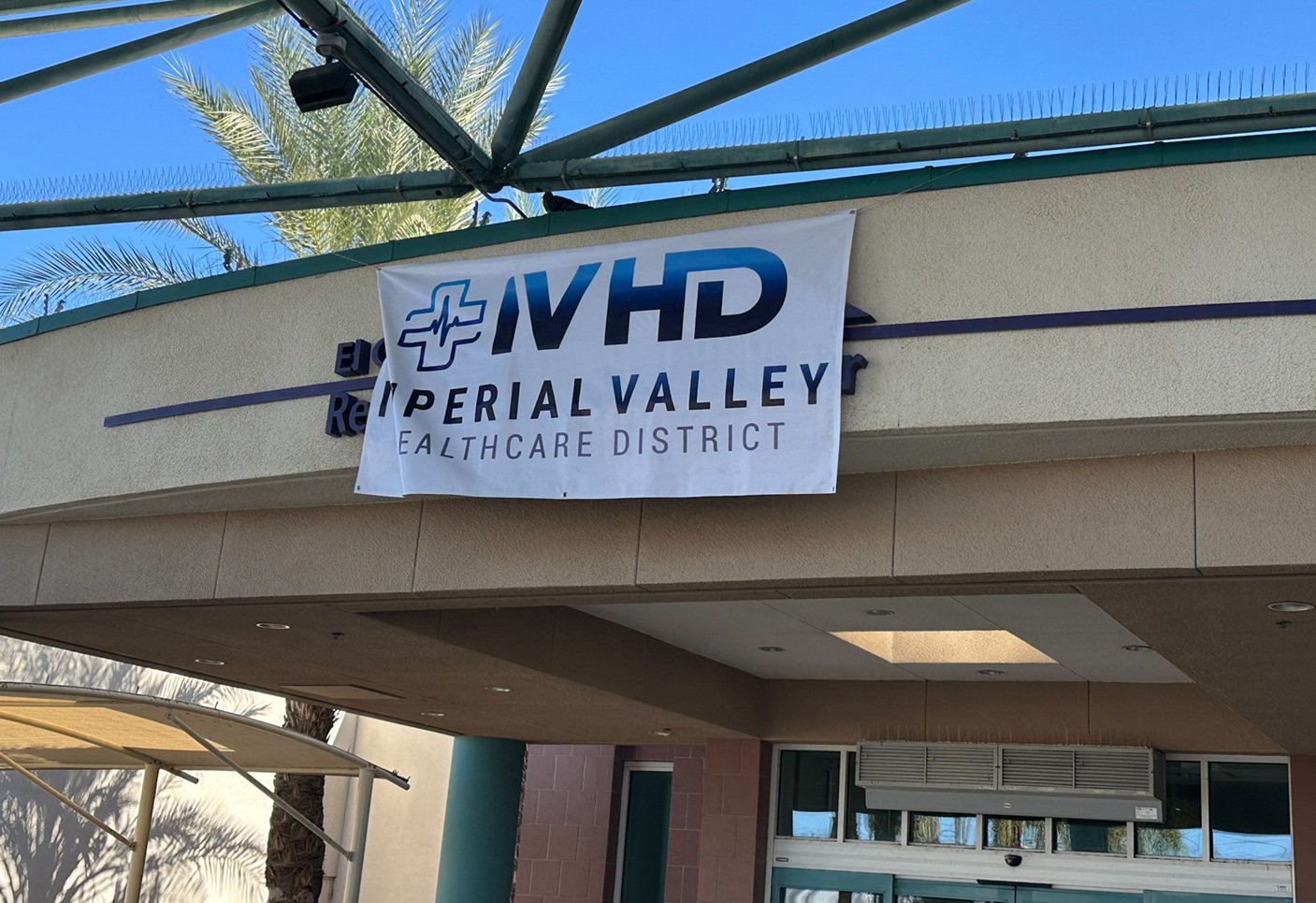
Measure N comes at a significant transition for the county’s health care system following the transfer of El Centro Regional Medical Center from the city of El Centro to the Imperial Valley Healthcare District, bringing the hospital under the same public entity responsible for Pioneers Memorial Hospital in Brawley.
 The acquisition was finalized Oct. 15, completing a consolidation process established through state legislation in 2023.
If approved, the parcel tax would take effect July 1, 2027, with collections beginning in the 2027-28 fiscal year. Unlike a temporary tax with a specified expiration date, Measure N would remain in effect until repealed.
Under the proposal, owners of taxable real property within the Imperial Valley Healthcare District would pay $111 annually for each taxable parcel.
The tax would be assessed on a per-parcel basis rather than according to a property’s assessed value, meaning owners of properties with different market values generally would pay the same amount for each taxable parcel.
For example, a property owner with one taxable parcel would pay $111 annually, while an owner with three taxable parcels would pay $333.
The measure defines a parcel as a unit of real property receiving a separate tax bill from the Imperial County Treasurer-Tax Collector, regardless of whether it constitutes a legally subdivided parcel.
The Imperial County Assessor’s records as of March 1 preceding each applicable fiscal year would determine whether a parcel is taxable or exempt. The district’s board also would have authority to exempt specific parcels upon taxpayer request under procedures established by the district.
The Imperial County Treasurer-Tax Collector would administer the tax through the existing property tax system. Unpaid taxes would be subject to penalties and interest and could become a lien against the property until the outstanding balance is paid.
Because Measure N establishes a special tax dedicated to specific public services, it requires approval from at least two-thirds of voters casting ballots on the measure. The proposed tax follows years of financial difficulties affecting Imperial County’s two hospitals.
In 2023, Pioneers Memorial Hospital and El Centro Regional Medical Center received loans through California’s Distressed Hospital Loan Program, which provides financial assistance to eligible health care facilities experiencing financial hardship.
The financial challenges contributed to broader discussions about the long-term sustainability of hospital services in Imperial County and the need to consolidate public health care operations.
Assembly Bill 918, signed into law in 2023, established the Imperial Valley Healthcare District as a countywide public health care entity.
The legislation dissolved the Pioneers Memorial Healthcare District and Heffernan Memorial Healthcare District, transferring their assets, rights, and responsibilities to the newly established district. El Centro Regional Medical Center required a separate acquisition process because the hospital was owned by the city of El Centro.
The El Centro City Council approved an initial asset transfer agreement in July 2025 and voted unanimously Oct. 13, 2026, to authorize the final transfer of the hospital’s facilities, property and operating assets.
The acquisition closed Oct. 15, consolidating the county’s two acute care hospitals under the Imperial Valley Healthcare District.
According to law firm Snell & Wilmer, which represented the district during the acquisition, the transaction involved negotiations concerning hospital licenses, bondholders, pension liabilities and other financial and regulatory obligations.
The firm also reported that more than 13,000 Imperial County residents traveled outside the county for medical treatment in 2022, illustrating existing gaps in local health care access.
The consolidation is intended to create a more coordinated regional health care system, although bringing the hospitals under one governing entity does not automatically resolve their financial obligations or operational challenges.
According to the ballot measure, revenue generated by the tax would be restricted to public hospital services.
The district identifies several priorities, including maintaining emergency medical care, supporting ongoing hospital operations, acquiring updated medical technology and equipment, expanding specialized medical services, and recruiting and retaining qualified doctors and nurses. The proposal specifically identifies improvements in cancer treatment, cardiac care, pediatric services, and children’s health care among its intended objectives.
Another significant component involves preparing the district to finance seismic upgrades required under California law. In March 2026, an independent consultant presented a debt capacity analysis identifying an estimated annual tax revenue need ranging from $7 million to $12.5 million, depending on the size of future seismic improvement projects.
The proposed $111 parcel tax falls within that range, with projected annual collections of approximately $8.9 million.
However, the measure does not establish a specific allocation of revenue among hospital operations, staffing, medical equipment, service expansion, and seismic improvements.
Instead, those expenditures would be determined through the district’s annual budgeting process, subject to the purposes authorized by voters.
The district also acknowledges that its financial estimates depend on several variables that could change over time.
One of the central financial considerations behind Measure N is the need to bring hospital facilities into compliance with California’s earthquake safety standards.
Hospitals are subject to state seismic requirements intended to ensure that facilities can withstand earthquakes and maintain essential medical operations.
Meeting those standards can require substantial investments in building improvements, structural modifications, and replacement facilities.
The ballot measure identifies seismic upgrades at Pioneers Memorial Hospital as one of the district’s potential funding needs.
According to the district’s explanation, the additional tax revenue would help establish a financial position that could support financing for future construction and improvement projects.
However, approval of Measure N would not necessarily provide enough money to pay directly for all required seismic improvements. Rather, the recurring revenue could strengthen the district’s ability to obtain financing while continuing to support hospital operations.
The actual costs of seismic improvements, the amount of financing required and the financial obligations associated with future projects would depend on subsequent planning and district decisions.
Measure N would create an additional annual expense for owners of taxable property throughout Imperial County.
Because the proposed assessment is a flat parcel tax, the amount owed would not be directly tied to property values, household income, or the size of a business.
Consequently, owners of lower-valued properties would pay the same $111 per taxable parcel as owners of higher-valued properties, unless an exemption applies.
Owners of multiple taxable parcels would face higher combined assessments. The measure does not establish a general exemption based on age, income or disability, although it allows the district’s board to consider exemptions for specific parcels upon request.
The tax also could affect renters indirectly if property owners incorporate additional expenses into rental costs, although the measure itself does not impose a direct tax on tenants.
For property owners, the financial impact would depend primarily on the number of taxable parcels they own.
If Measure N does not receive the required two-thirds approval, the Imperial Valley Healthcare District would not be authorized to impose the proposed parcel tax.
The district would continue operating under its existing funding structure and would need to address hospital operating expenses, staffing requirements, infrastructure improvements, and seismic obligations through other available financial resources.
According to the district’s ballot statement, the absence of additional revenue could increase the risk of reduced services, declining quality of care, or potential hospital closures.
Those outcomes, however, are identified as risks rather than established consequences of the measure’s defeat.
The district has not provided, in the ballot language, a detailed schedule identifying which services would be reduced or eliminated if the proposal fails.
Hospital finances remain dependent on factors including patient volume, reimbursement from government and private insurers, staffing expenses, operating costs, and future capital investments.
Measure N includes financial accountability provisions requiring that revenue be dedicated exclusively to public hospital services.
The funds would be subject to annual independent audits, consistent with the district’s existing financial oversight requirements.
By Jan. 1 each year, the district’s chief financial officer would be required to submit a report to the Board of Directors identifying the amount of tax revenue collected and spent, along with the status of projects financed through the tax.
The district also would continue its public budget process, during which staff presents projected revenue, expenditures, and capital improvement plans for board consideration.