-Editorial
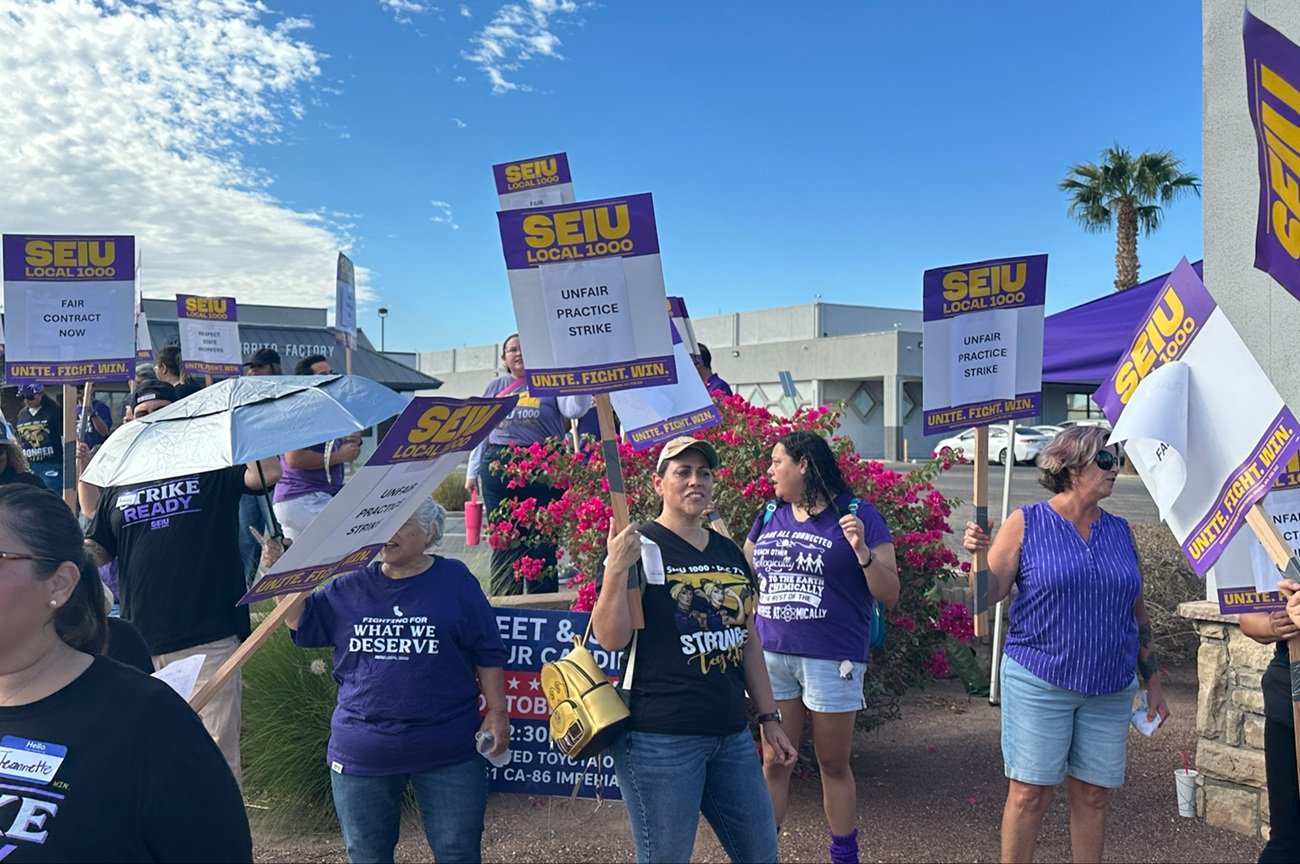
A group of state employees from Imperial County joined a one-day strike on Oct. 21, with thousands of workers across California represented by Service Employees International Union Local 1000, in a labor dispute over wages, health care costs, and remote work policies.
The statewide walkout involved employees from more than 140 state agencies and departments amid stalled contract negotiations between the union and Gov. Gavin Newsom’s administration.
In El Centro, participating workers represented several state agencies, including the Employment Development Department, Department of Motor Vehicles, California Department of Corrections and Rehabilitation, and California Department of Fish and Wildlife.
 Cassandra Shannon, a teacher with the California Department of Corrections and Rehabilitation and president of SEIU Local 1000 District Labor Council 710, said local employees joined the demonstration to demand improvements in their working conditions and compensation.
“We are here today, as we are all over the state, to fight for a fair contract,” Shannon said. “We want a fair contract. We want them to come back to the table.”
The union is seeking a 20% salary increase over three years, increased state contributions toward employee health insurance and changes to the administration’s requirement that many state employees return to their offices four days a week.
Union representatives are also requesting additional telework protections and a $25 commuting stipend to offset transportation expenses associated with the return-to-office policy.
Shannon said rising living expenses have placed additional financial pressure on state employees, particularly those supporting families while working in demanding public service positions.
“Everything is costing us way too much to continue doing our jobs and to be effective at them,” Shannon said.
She criticized the administration’s approach to contract negotiations, alleging that state representatives failed to provide meaningful counterproposals during two months of bargaining.
According to Shannon, the union’s demands reflect concerns about employee retention, workplace conditions and the ability of state workers to maintain financial stability.
The administration’s response to those specific allegations was not immediately available.
The strike marked the first statewide work stoppage organized by SEIU Local 1000 since the union was established in 2004.
The union represents approximately 95,000 to 100,000 state employees, including administrative personnel, nurses, counselors, auditors, and other public service workers.
Although the union organized the strike statewide, not every represented employee was authorized to participate. Approximately 4,400 essential workers, primarily certain medical personnel employed at state prisons and hospitals, were required to remain on duty following rulings by the California Public Employment Relations Board.
In Imperial County, Shannon said approximately sixty workers participated in the local demonstration, representing a cross-section of state government operations, including employees associated with the region’s two state prisons.
Shannon also raised concerns about the state’s return-to-office requirements, arguing that remote work arrangements have allowed employees to perform their responsibilities while reducing government operating expenses.
She cited an independent study that she said estimated telework arrangements could save California approximately $128 million annually. That figure could not be independently verified.
“What’s going on that we’ve got to be in all these buildings to sit and do our work when we can do it at home?” Shannon said.
The return-to-office policy has become a central issue in the labor dispute, with union representatives arguing that mandatory office attendance increases commuting expenses and reduces workplace flexibility.
Shannon said the union believes telework can remain an effective option for employees whose responsibilities do not require their physical presence at state facilities.
She also expressed concern about mandatory overtime and employee fatigue, particularly among workers in demanding public service positions.
Drawing on her previous experience as a nurse, Shannon described an incident in which she became severely exhausted after working a double shift.
She said the experience illustrated the potential consequences of extended working hours for employees and the people they serve.
Shannon emphasized that working conditions in correctional institutions can be especially challenging, citing the responsibilities of employees assigned to high-security facilities.
The statewide strike comes as California faces competing budget priorities and ongoing negotiations over public employee compensation.
Asked whether additional strikes could occur if negotiations remain unresolved, Shannon said union leadership would evaluate the situation before determining its next steps.
“I’m part of the board of directors,” Shannon said. “We will make a decision after we see what’s happening and look at all the things going on.”
Shannon said the union hopes the demonstration will encourage state negotiators to return to the bargaining table and reach an agreement addressing employees’ economic and workplace concerns.