-Editorial
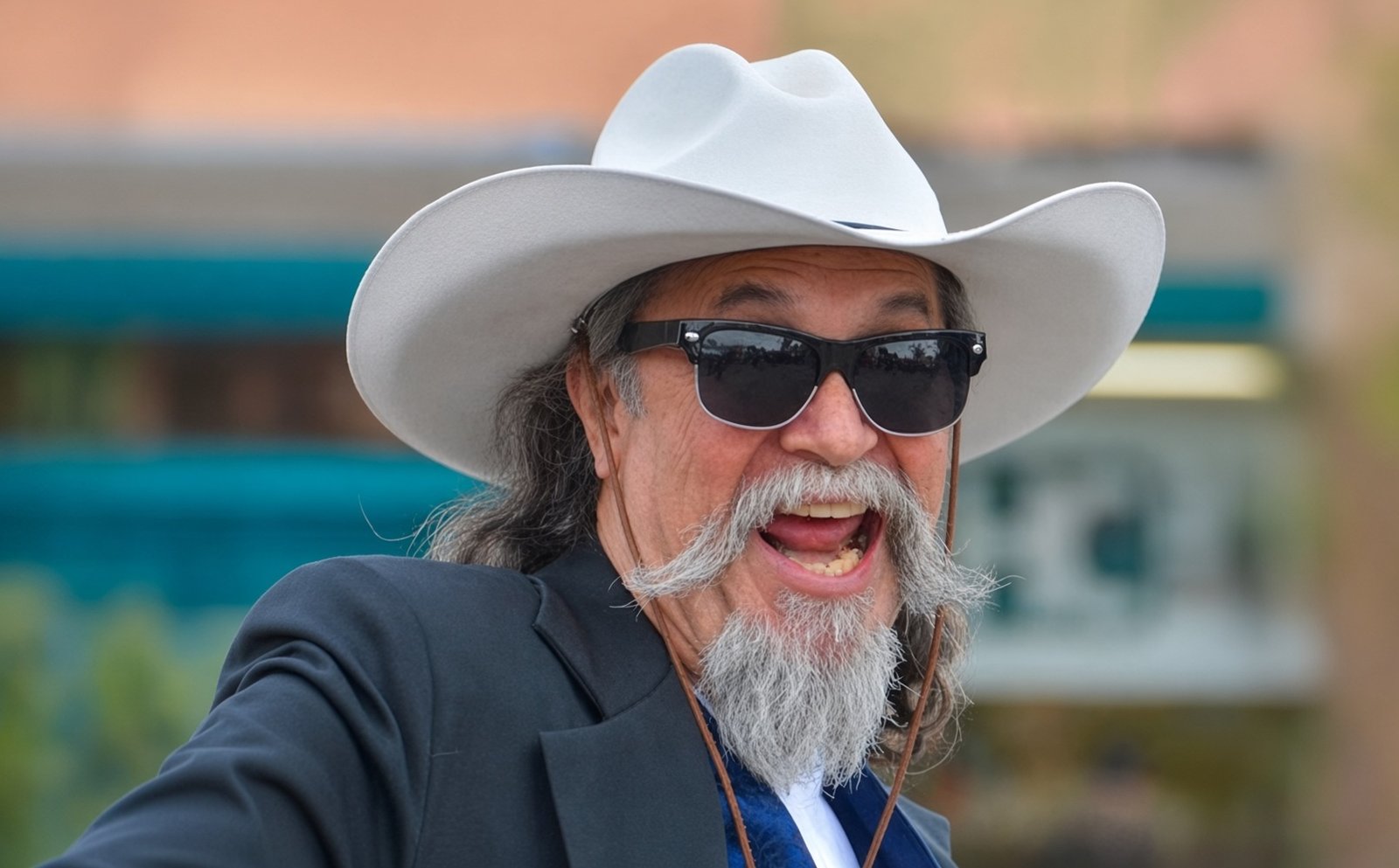
Dave Garcia, an Imperial Valley artist whose work on popular comic book franchises, including Teenage Mutant Ninja Turtles and The Tick, helped create lasting memories for generations of comic book readers, has died, according to an announcement shared by his family on social media.
Garcia, whose full name was Gilbert David Garcia, was born in Brawley and spent most of his life in Holtville. His career in the comic book industry spanned decades, taking him from a small agricultural community in Imperial County to working on internationally recognized characters.
 His death prompted tributes from members of the comic book community, including fellow artists, convention organizers, and admirers who remembered his artistic contributions and his willingness to support aspiring creators.
In an interview with Beyond Borders Gazette on Sept. 26, Garcia reflected on his childhood, military service, professional career, and the experiences that helped establish him in the comic book industry.
Garcia said his interest in drawing comics began during childhood, although he initially did not realize that illustration could become a professional career.
That changed during the 1960s, when Marvel Comics began prominently identifying the writers and artists responsible for its publications.
“It wasn’t until the ’60s when Marvel came out, and Marvel started giving credit to the artists and writers,” Garcia recalled.
The recognition helped him understand that comic book illustration was a profession he could pursue.
Garcia was drafted into the military in 1972 and subsequently volunteered for service in the U.S. Army, where he spent three years.
Following his military service, he traveled to San Diego, where his future wife was attending school. During that period, he discovered San Diego Comic-Con, an experience he described as a turning point in his career.
At the convention, Garcia encountered artists his own age who had already begun working professionally in comics. Their accomplishments encouraged him to pursue similar opportunities.
His early professional work included Panda Khan, a comic book character and series he developed with his wife, Monica Sharp-Garcia. The project was initially published through Warp Graphics as a backup feature before the couple decided to publish the comic independently.
The character became one of Garcia’s most recognizable creations and was later represented in action figure collections, introducing his artwork to audiences beyond traditional comic book readers.
Garcia’s involvement with Teenage Mutant Ninja Turtles developed through connections he established in the independent comic book community.
He recalled participating in fanzines alongside Peter Laird, one of the creators of Teenage Mutant Ninja Turtles. Their professional relationship eventually contributed to Garcia’s involvement with the franchise as it expanded into animated television and additional comic book publications.
During the 1980s, Garcia became involved in the Archie Comics adaptation of Teenage Mutant Ninja Turtles, which introduced the characters to younger audiences following the success of the animated television series.
His work contributed to an era when the franchise became a major presence in popular culture through comic books, television, films, and merchandise.
Following his involvement with the Turtles, Garcia began working on The Tick, the superhero parody created by Ben Edlund.
Garcia said he initially joined the publication as an inker after responding to an advertisement seeking artists. His responsibilities later expanded to include penciling, cover illustrations, and other assignments.
He also worked on Paul the Samurai, a spinoff of The Tick, for approximately two years.
Garcia estimated that his association with The Tick lasted about 20 years, making it one of the longest professional relationships of his career.
His contributions included comic books, paperback illustrations, and other artwork associated with the franchise.
Despite his accomplishments, Garcia maintained strong ties to Imperial County, where he remained involved with the local artistic community and participated in comic book conventions and public events.
During his September interview, Garcia described himself as largely retired from professional comic book assignments but said he continued drawing because of his personal enjoyment of storytelling.
One of his later projects, Shadow West, combined elements of classic Western films with supernatural horror.
The concept emerged from his childhood fascination with black-and-white Westerns and monster movies, particularly his curiosity about why the Lone Ranger used silver bullets.
Garcia developed that idea into stories involving werewolves, supernatural conflicts, and historical Western settings.
His six-issue miniseries, The Range War of the Confederate Werewolves, explored a fictional attempt to restart the Civil War using werewolves.
At the time of the interview, Garcia was developing another installment, The Big Roundup, which he said would introduce dinosaurs into the Old West through supernatural events.