-Editorial
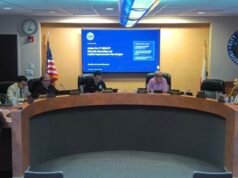
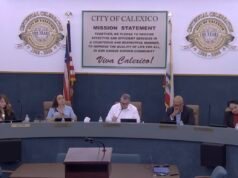
The Calexico City Council voted 3-2 on Oct. 7 to table a proposed $100,000 budget amendment for engineering and design work on a border traffic realignment project following a contentious discussion over public outreach, potential impacts on businesses, and the need to address longstanding traffic congestion near the Calexico West Port of Entry.
The decision showed disagreements among council members over whether the city should move forward with a traffic circulation plan developed by the California Department of Transportation or conduct additional community meetings before committing funds to the project.
 Mayor Victor Legaspi, Mayor Pro Tem Lorenzo Calderon and Councilwoman Adriana Marquez voted to postpone the item, while Councilwomen Lisa Tylenda and Diana Nuricumbo opposed the motion.
The proposed budget amendment would have allocated $100,000 from the city’s Local Transportation Authority Measure D Fund to prepare plans, specifications, and an engineer’s estimate for the Border Traffic Realignment Project, identified as Alternative 5.
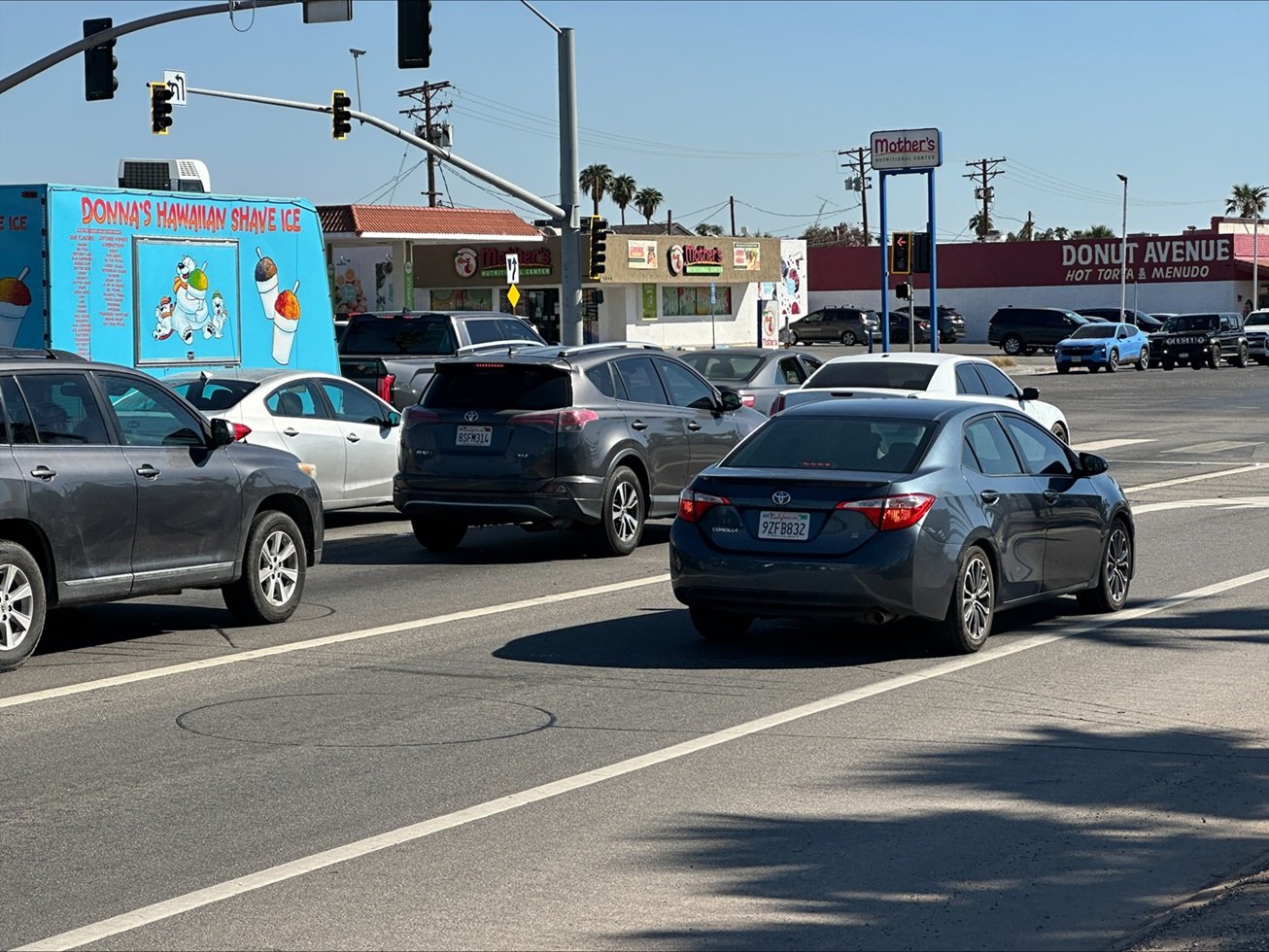
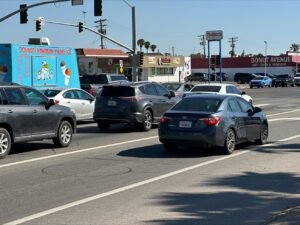
The project is intended to improve traffic circulation along State Route 111, State Route 98, and Cesar Chavez Boulevard, particularly in areas affected by vehicles waiting to enter Mexico through the downtown border crossing.
According to the city’s staff report, Caltrans developed a Project Study Report evaluating alternatives to improve traffic operations around the port of entry. The proposed improvements would ultimately require implementation by the city.
At its Sept. 16 meeting, the council directed staff to begin the process of hiring a consultant to prepare the project’s engineering and design documents. The Oct. 7 agenda item sought funding to advance that work and incorporate the project into the city’s Capital Improvement Program.
During public comments, Benjamin Horton, the property manager at Crossroads Plaza, the shopping center anchored by Food 4 Less near the border traffic corridor, urged the council to carefully evaluate the proposal and consider its potential impact on commercial activity.
Horton said a letter was submitted to council members outlining concerns related to the proposed traffic circulation changes.
He encouraged city officials to consult with Caltrans and reconsider previous transportation proposals developed when plans for the new port of entry were being discussed.
“Way back when, when we talked about the traffic and they were getting ready to build a new port of entry, we had a proposal that was put forth by Caltrans to mediate the traffic that was proposed to take place,” Horton said.
He described the earlier proposal as a good plan but suggested that politics had influenced subsequent changes.
Horton expressed concern about redirecting traffic from Highway 98 onto Cesar Chavez Boulevard and warned that additional congestion could interfere with access to businesses at Crossroads Plaza.
“We do not want to destroy the Crossroads Center’s ability to do business because the traffic closes a lot of the businesses down,” Horton said.
He asked the council to give the issue further consideration before moving ahead with the proposed realignment.
Legaspi expressed concerns about the potential effects on neighborhoods along Cesar Chavez Boulevard and Imperial Avenue, particularly as border traffic continues to extend into surrounding streets.
“I wish we could have done some town hall meetings with our residents, with the people on the west side, with the east side people also, with the people in the downtown,” Legaspi said.
The mayor described witnessing significant traffic congestion along Highway 98 during a recent visit to Mexicali and questioned whether the proposed circulation changes would reduce the need for traffic control personnel.
He also raised concerns about intersections, railroad crossings, and the potential for additional congestion in residential areas.
“This is a very delicate decision,” Legaspi said, emphasizing the need for additional public outreach before proceeding.
Nuricumbo disagreed with delaying the project, arguing that Calexico has struggled for years to address border traffic and that continued postponements have prevented the city from implementing potential solutions.
She said residents throughout Calexico have repeatedly expressed frustration about their inability to travel across the city without encountering long lines of vehicles waiting to cross into Mexico.
“For many, many years, we’ve been trying to figure out the solution to the border traffic, and we always come to a dead end right here,” Nuricumbo said.
She argued that the council should prioritize the transportation needs of the broader community while continuing to work with businesses that could be affected by the proposed changes.
Nuricumbo also alleged that some businesses benefit financially from border traffic congestion, including through arrangements that allow motorists to bypass portions of the vehicle line.
She emphasized that the item before the council involved hiring an engineering consultant rather than immediately implementing the traffic changes.
According to Nuricumbo, additional community meetings could take place while the consultant reviews the proposed design.
She also warned that postponing the project could jeopardize other transportation improvements, including a proposed connection between downtown pedestrian facilities and a new transportation center, as well as improvements along Highway 111 associated with regional transportation planning efforts.
“I’m letting you know that we’re not going to fix downtown. We’re not going to fix Imperial Avenue because you’re listening to a few people,” Nuricumbo said. “We could help them out if this affects them. We can look at ways to help them, but don’t lose sight of the bigger picture for a small group.”
Tylenda also supported moving forward, citing the technical work already completed by Caltrans and the city’s longstanding traffic problems.
She said the traffic study had been developed by experienced transportation engineers and questioned why the city would continue delaying a proposal intended to improve circulation.
“You don’t know if you don’t try,” Tylenda said.
She also raised concerns about potential municipal liability associated with traffic conditions, arguing that engineering studies can become relevant in legal proceedings involving roadway safety.
Tylenda referred to a previous ambulance-related collision near the affected area and said the city should consider the safety recommendations contained in the transportation study.
She noted that the city’s police and fire chiefs had previously expressed support for changing the traffic route.
Tylenda acknowledged that businesses could experience disruptions but argued that any negative effects could be evaluated and addressed through additional planning and mitigation measures.
She said improved circulation could also create opportunities for economic development along Imperial Avenue, where several commercial properties have struggled to attract or retain businesses.
Marquez challenged the proposal, emphasizing the need to consider residents on the west side of Calexico who could experience increased traffic along Cesar Chavez Boulevard and Highway 98.
She compared the issue to previous council discussions involving the Hearthstone development, during which council members emphasized transparency and community participation.
Marquez questioned whether the same level of consideration was being extended to west-side residents.
She also raised concerns about nearby recreational facilities, a school, and businesses that could be affected by traffic being redirected through the neighborhood.
Marquez disputed the suggestion that businesses should receive less consideration because some do not generate sales tax revenue directly for the city, noting that those establishments may employ Calexico residents.
“We need to make sure that we’re doing our due diligence, that we’re talking to the businesses,” Marquez said.
Calderon similarly argued that the city should provide residents and merchants with additional opportunities to review the proposal before proceeding.
He said Calexico’s commercial landscape has changed significantly since the traffic study was initiated and questioned whether the existing recommendations adequately reflect current economic and transportation conditions.
Calderon also expressed concern about the project’s broader financial implications, referring to an estimated $2 million cost associated with the improvements.
He argued that the city should not commit to a potentially expensive project without obtaining additional community input.
“Every businessman matters. Everyone. That is what Calexico is,” Calderon said.
He pointed to businesses along Imperial Avenue and Highway 98, including restaurants and shopping centers, that could be affected by changes to vehicle circulation.
Calderon said representatives from the Imperial County Transportation Commission and Caltrans were willing to participate in a community meeting to explain the proposal and respond to concerns.
He maintained that requesting additional outreach should not be interpreted as an effort to undermine the project.
The debate also included disagreements over whether previous community meetings had provided sufficient public input and whether political considerations were influencing the council’s positions.
Supporters of advancing the project argued that years of engineering studies and transportation planning justified moving forward with the design phase. Those favoring postponement maintained that residents and merchants deserved additional opportunities to understand the proposal and its potential consequences.
Following the discussion, Calderon made a motion to table the budget amendment to allow additional public and business outreach, including participation from transportation officials and other stakeholders.
Marquez seconded the motion.
Before the vote, Tylenda requested that the council establish a specific date for the proposed community meeting to avoid an indefinite delay.
She suggested Oct. 28 as a possible date, but other council members said scheduling would require coordination with transportation officials and stakeholders. No firm date was established during the discussion.