-Editorial
Calexico voters will decide in November whether to approve Measure O, a special sales tax proposed to provide dedicated funding for police, fire and other public safety services.
The Calexico City Council unanimously voted July 1 to place the measure on the Nov. 3 General Municipal Election ballot. Approval requires the support of at least two-thirds of voters casting ballots on the measure.
If approved, Measure O would impose a 0.5% special transactions and use tax until the city’s existing Measure H sales tax expires Sept. 30, 2030. At that point, the Measure O rate would increase to 1%, according to the city attorney’s impartial analysis. The tax would remain in effect for 20 years and expire March 31, 2047.
 City officials estimate Measure O would generate about $4 million annually at the 0.5% rate and approximately $8 million annually once the rate increases to 1%.
The measure would divide the revenue equally between police and law enforcement purposes and fire, emergency medical, paramedic, ambulance, and disaster preparedness services.
The funds could be used for property, vehicles, equipment, and supplies; construction, operation, and maintenance of facilities; employee salaries, benefits, and training; and other operational expenses associated with public safety services.
Unlike a general tax, which can be used for a broad range of municipal expenses, Measure O would be a special tax with its revenues restricted to the purposes identified in the measure.
The tax would be collected alongside existing sales taxes and would apply to taxable purchases made within the city. The city attorney’s analysis states that all revenue generated by Measure O would remain in Calexico rather than being shared with the state, county, or another agency.
If approved, the measure also would establish a seven-member Citizens’ Oversight Committee composed of Calexico residents. The committee would review revenues collected and expenditures made from the tax and report its findings to the City Council.
Calexico Police Chief Armando Orozco said the police department’s primary need is additional staffing.
The department currently has 19 officers, Orozco said, with funding budgeted for 20 positions. He said the department could use the additional revenue to add at least six officers, as well as potentially hire personnel in records, dispatch, administration, and other areas.
“We’re short-staffed from the bottom to the top,” Orozco said.
Orozco said additional officers could allow the department to increase patrol coverage and restart or expand traffic enforcement involving motorcycle officers. He said the department receives frequent complaints involving traffic, school zones and congestion near the border.
Orozco said his priority is to focus on providing services to the public rather than on the condition of the department’s facilities. “I’m more service-oriented when it comes to stuff. I like to see what I can provide for the public because a building is nice, but realistically, the public really doesn’t understand whether we’re in a new building or an old building. It’s what they see on the street. I would rather they see more police officers out there to be able to serve them better, and eventually that is part of the goal,” he said.
According to Orozco, Measure H has helped the Police Department maintain existing operations by supplementing salaries and providing money for equipment. He said the department would otherwise have faced greater reductions.
Measure H, approved in 2010, is the city’s existing 0.5% general sales tax. It can be used for police, fire, recreation and other city services and is scheduled to expire in 2030.
Orozco said Measure O would differ because its revenue would be legally restricted to public safety purposes.
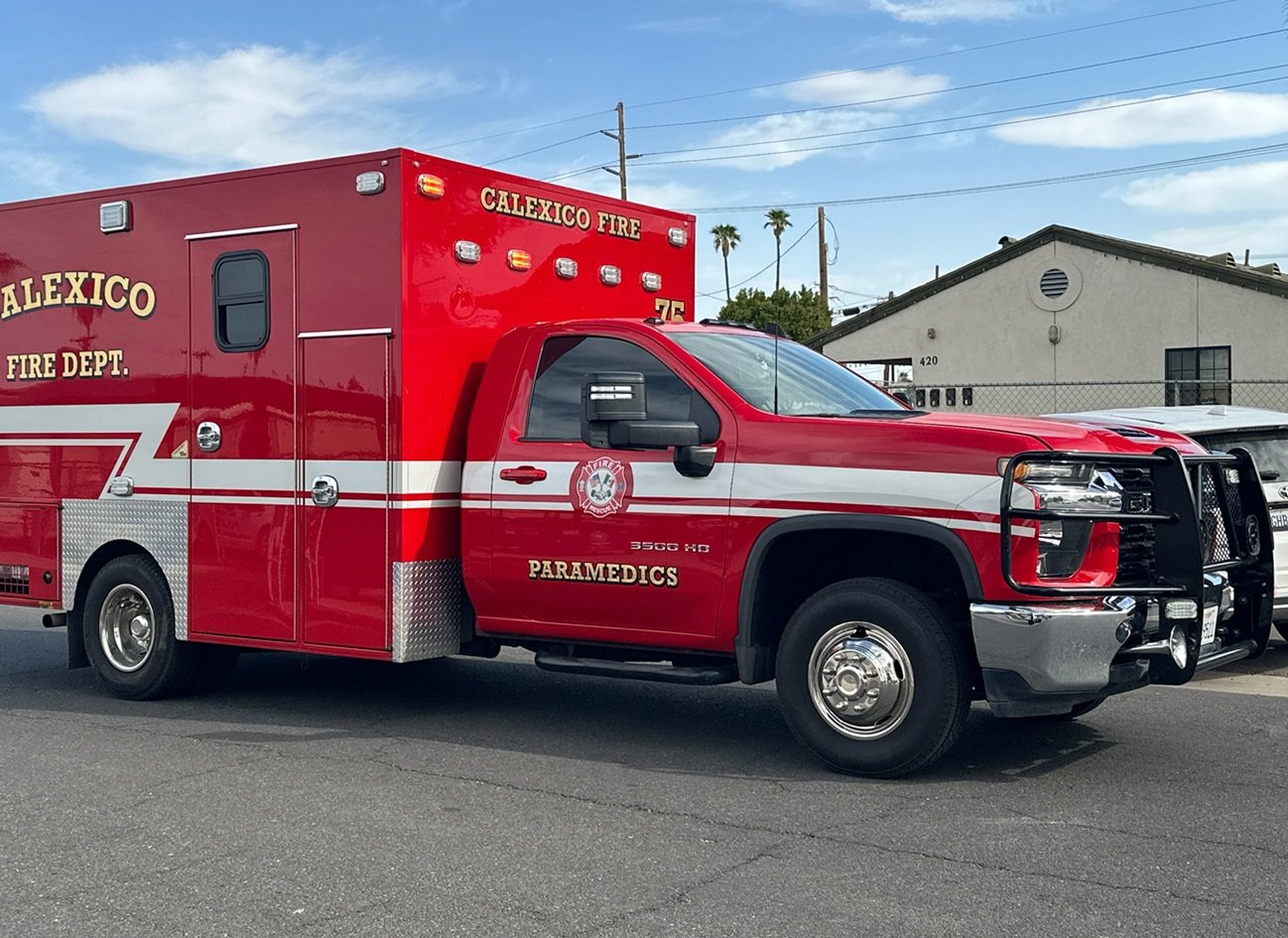
For the Fire Department, Chief Juan Contreras said staffing is also the department’s primary concern.
Contreras said the department currently has 25 firefighters and relies heavily on overtime to maintain minimum staffing levels.
“We need 10 per shift, and we are currently at eight with two overtimes every day,” Contreras said.
Contreras said the department’s long-term staffing level would ideally be higher, but he said his immediate goal would be increasing the number of firefighters to about 30, rather than reaching the larger staffing level suggested by national staffing formulas.
He also cited equipment and infrastructure needs, including replacement of the department’s ladder truck, which he said is a 1996 model.
Contreras said the department’s emergency workload is affected by calls to the Calexico ports of entry. He estimated that about 33% of the department’s calls involve the ports, including vehicle secondary inspections and pedestrian crossings.
“So now you’re taking away from the stakeholders and the actual community from the city when you’re tying up one of the ambulances at the port of entry three to five times a day,” Contreras said. “So it is a number that has been steadily increasing over these past few months at the port of entry, but it’s unfortunate. You know, we’re a border community, so we have to service those two ports of entry as well,”
The Fire Department also faces challenges associated with the city’s growth and its location along the international border, Contreras said.
“The traffic through the ports of entry effectively doubles the activity in Calexico during much of the day, increasing the risk of vehicle accidents, vehicle-pedestrian collisions and other major incidents,” Contreras said. “As a border community, we maintain strong relationships with U.S. Customs and other border agencies, and we work together to respond to emergencies. Those are among the unique challenges we face as a border community.”
In addition to staffing, Contreras said Measure O could help with vehicle replacement, equipment and facility improvements. He also identified a potential third fire station on the city’s north side as a longer-term goal.
Contreras said Measure H has provided the Fire Department with an estimated $420,000 to $500,000 annually and nearly $7 million over roughly two decades. He said the money has helped with salaries, equipment, and maintaining existing operations but has not allowed the department to significantly increase staffing.