-Editorial
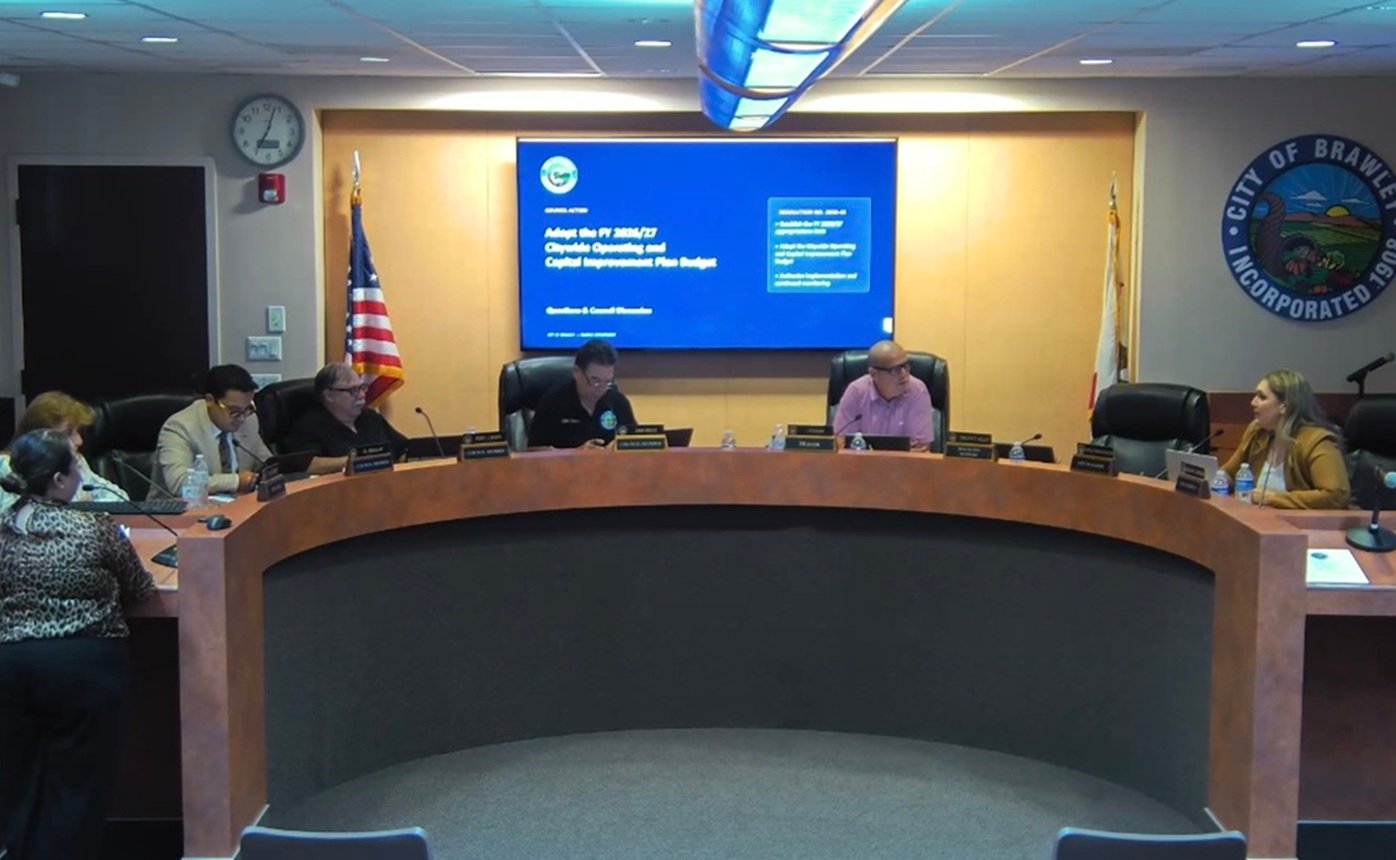
The Brawley City Council unanimously approved the city’s Fiscal Year 2026-27 Citywide Operating and Capital Improvement Plan budget during its July 27 special meeting, adopting a financial plan that includes approximately $63.8 million in projected revenues and $72 million in appropriations across all city funds.
Finance Director Silvia Luna said the budget provides spending authority from July 1, 2026, through June 30, 2027, while funding city operations, capital projects, staffing, grant programs and long-term financial obligations.
“This budget establishes spending authority for the period from July 1, 2026, through June 30, 2027,” Luna told the council. “It reflects a careful effort to maintain essential services, advance priority infrastructure projects, respond to increasing operating costs, and preserve the financial flexibility the city needs in an uncertain economy.”
Luna said the city administers 50 separate funds, employs approximately 172 full-time equivalent positions and plans to manage 56 capital improvement projects during the fiscal year.
The city’s capital improvement program totals approximately $24 million, including projects involving streets, water and wastewater infrastructure, parks, recreation facilities, public safety equipment and airport improvements. Of the 56 projects, 35 are carryover projects from previous fiscal years, while 21 are new.
Luna emphasized that the difference between projected revenues and appropriations does not represent an operating deficit.
“The $8.2 million difference does not represent a citywide operating deficit,” she said. “A significant portion of this difference results from capital projects funded with grants, restricted revenues and other resources received or accumulated in prior fiscal years.”
The city’s General Fund is projected to receive $28 million in revenue and spend $28.2 million, resulting in a planned $218,000 deficit, or about 0.8% of appropriations. Luna said the shortfall will be covered with existing reserves and should be viewed as a one-time use of available resources rather than an ongoing practice.
“While this deficit is not ideal, it represents less than 1% of the General Fund appropriations,” Luna said. “The budget preserves core public services while maintaining a strong reserve position.”
According to Luna, approximately 65% of General Fund revenue is generated through taxes. The budget assumes overall tax revenue growth of about 4%, while recognizing continued economic uncertainty related to inflation, tariffs, fuel prices, interest rates and consumer spending.
Personnel costs remain the city’s largest expense, accounting for approximately 80% of the General Fund budget. The budget includes previously approved labor agreements, employee step increases, insurance and pension costs, technology upgrades, facility maintenance, replacement of public safety equipment and expanded recreation programming, including year-round pool operations.
Luna said staff reduced the projected General Fund deficit from an initial estimate of approximately $664,000 presented during budget discussions in March to $218,000, a reduction of about 67%.
The city expects to end the fiscal year with approximately $8.6 million in unassigned General Fund reserves, well above its policy minimum. Luna said maintaining reserves above the city’s 15% policy target protects against revenue declines, emergencies and infrastructure needs.
“A reserve level near the minimum may satisfy a policy calculation, but it may not provide sufficient protection if several risks occur at the same time,” Luna said.
Councilman Gil Rebollar asked about the city’s long-term strategy for addressing pension-related costs, including CalPERS obligations. Luna said pension expenses include regular employer contributions, payments on the city’s 2016 pension obligation bond and its unfunded accrued liability. She noted that favorable CalPERS investment returns are expected to reduce some pension costs beginning in fiscal year 2028-29, although increases are anticipated in the next two budget cycles.
Rebollar also asked whether funding had been included for labor agreements still under negotiation. Luna said the budget reflects only agreements finalized as of the meeting date, along with compensation changes previously approved for unrepresented employees, and does not include potential future agreements with remaining bargaining units.
Following discussion, the council unanimously approved the fiscal year budget by voice vote. The adopted budget will be available for public review and will serve as the city’s financial plan for the coming fiscal year, with staff providing quarterly updates and returning to the council if significant budget amendments become necessary.